As some of you know, this blog details the trials and tribulations of research. Sometimes, you mess up. I'm by no means a math genius and don't consider myself an expert statistical software user. I learn as I go, through trial-and-error and a lot of consulation and independent research. In reviewing the procedures I used to run the stats on my data, it appears I was doing it incorrectly. You have learn to speak the language of the software and apparently I was mumbling because there seems to be a miscommunication. One of the things I was super excited about turns out to not be statistically significant. The data is still interesting and there's still a story, but the "wow" factor may have just been knocked down a notch.
Keep on keepin' on.
Thursday, March 10, 2011

Wednesday, March 9, 2011
 For all my fellow anglers out there, I think you will find the results of the telemetry data analysis quite interesting. Some of it may confirm what you've observed for some time, some of it may surprise you. Currently, we're looking at how time of day (dawn, day, dusk, night), lunar quarter for both waning and waxing periods (eight total quarters), and temperature affect activity and depth. Time permitting we may explore other variables, but for now that's all we will examine.
Who knew data could be this fun to analyze!

Sunday, February 27, 2011
Muskies Canada Board-of-Director's Meeting
I had the honor of speaking at the Muskies Canada board-of-directors meeting yesterday. The presentation was actually one of the hardest I have ever had to create because little else is needed to complete the project at this point, aside from sitting my butt down in front of my computer and writing. However, it forced me to think (always a good thing) about issues that I will need to communicate when I defend my thesis. [A big thank you to my girlfriend for giving me direction on the contents of the presentation. THANKS, SARAH!]
Perhaps the biggest message to be gained from this project is that our research supports the notion that anglers CAN pursue catch-and-release fishing responsibly. It is our task as anglers to promote the well-being of released fish. Those that oppose catch-and-release fishing feel that the endeavor cannot be done responsibly and that too much detriment is done to the fish. This study shows that groups of anglers have the ability to create handling procedures that minimize physiological and behavioural disturbances and maximize post-release survival. Although these procedures work for muskies, other procedures may be better for different species and species-specific guidelines should be developed. I know there are many readers here from Europe, the States, and elsewhere across our planet that pursue other species. Your mission, if you choose to accept it, is to develop handling procedures that maximize survival and minimize other sub-lethal impacts!

I am pleased to deliver this message to scientists around the world both in print and verbally when this case study will be put on the "world stage" at the World Recreational Fishing Conference held this coming summer in Berlin. Some of the brightest minds involved in recreational fishing science will be in attendance at this conference (e.g., Zeb Hogan of National Geographic). Many congratulations should be extended to the specialized muskie angling community for developing and modifying handling practices over the years with no agency involvement and little science-based influence. You all have been ahead of your times!
OK, I'm done reflecting on the weekend. I felt like this was worthy of sharing to others that weren't in attendance at the meeting.
Also, big congrats to my friend, field assistant, and co-author, Hedrik Wachelka, for the distinguished service award he was given this weekend as well as the new conservation award founded in his name (effective from here forth!).
Tuesday, February 15, 2011
Submitted!
I can now mark a big, fat CHECK on my to-do list. The catch-and-release paper has been submitted to Fisheries Research.
Now we wait and hear back from an editor and at least two referees. The fate of this paper now rests in the hands of these anonymous peer-reviewers (actually, first it's at the mercy of the editor then the reviewers).
OK, on to the next task!
Now we wait and hear back from an editor and at least two referees. The fate of this paper now rests in the hands of these anonymous peer-reviewers (actually, first it's at the mercy of the editor then the reviewers).
OK, on to the next task!
Thursday, February 10, 2011
Still Plugging Away
 The research and writing continues. I am in the process of putting the finishing touches on the muskie C&R manuscript. We're talking adding the literature cited section and then beginning the submission process to Fisheries Research. We're choosing this venue and not something like North American Journal of Fisheries Management because of the quick response FA is known for compared to NAJFM. In this day and age, biologists can access manuscripts from a variety of venues electronically and all it takes is one mass email and a bunch of forwarded messages to get this paper in the hands of those capable of putting it to good use.
My telemetry data set from this past summer has been a beast to deal with. I am typing from a 6-year old computer with Windows XP and the 2003 version of Excel. This old version of Excel couldn't hold more than 65,000 data points which posed a problem when I have 260,000+. I have been trying to piece-meal things together and trying other programs, but it has been a slow go. Microsoft Access was a good candidate, but I know nothing about the program. Finally, I was able to obtain a copy (free of charge!) of Microsoft Office 2007 including Excel 2007. This newer version can hold over 1,000,000 rows, thus the answer to my problems. Soon the data will be organized in such a fashion I can actually run some stats on it and start the analysis.
I will keep you all apprised on anything dramatic that happens with my thesis. The fun, however, ended last year with the last muskie for the C&R project being caught. From here on out it will be about stuffing as much information on all things muskie, fisheries biology, physiology, fish behavior, etc. as my cranium can hold.
Nevertheless, I have been enjoying the hard water season. If you don't own a flasher and ice fish, you owe it to yourself to buy one. I'm a student and don't make much money, but I couldn't pass up the opportunity to purchase a Vexilar FL-8. My stomach (and girlfriend's) tells me it was a wise decision.


Friday, January 14, 2011
The Strange and Bizarre: Fish #2104
Last week I received a message that someone had information about a transmitter. When I arrived in the office the next day I picked up the phone and called the number. The gentleman answered and I knew immediately the fish must have come from the Ottawa River. Sure enough, he told me his father-in-law was ice fishing and found a muskie washed up on shore (dead) at Petrie Island on the Ottawa River. As he recited the tag number and a serial number (first red flag) I realized something was wrong.
I hung up and flipped open my Excel spreadsheet for radio tagged muskies from 2009. The number he gave me was 2104... 2104, 2104, 2104. "Where is it? Wait, what the heck?" I closed that Excel spreadsheet and opened another: 2010 acoustic transmitter fish. Yep, there it was staring me in the face. 2104 was caught on June 15th, 2010 from the Rideau River, the only site we tagged fish with acoustic transmitters.
So, in order for this fish to have been tagged in the Rideau and make it all the way down to Petrie Island it would have had to travel approximately 26 miles. It's not a straight shot though; the fish would have had to negotiate four locks or three locks and a waterfall. After it successfully negotiated all that, then it would have had to swim another 11 miles to the island area.
The fish was last located on September 19th at the most upstream acoustic receiver in our Rideau study site. If it were swimming downstream we would have picked up its signal at each receiver as it swam downstream, or if not all receivers then at least some. However, the data show that the fish remained between only two (of nine) receivers for the duration of the study.
I'm wondering if an angler caught the fish and transported it into the Ottawa River. Why? Who knows. It's quite an unfortunate move. Unless the angler comes forward we'll never know for sure what happened to the fish. Nevertheless, it sure makes for an interesting story!
Thursday, December 9, 2010
What's Ahead?
Those that follow this blog may find it slowing down in the next few months. Why? The last official field season ended this past November. I'm in writing mode now and will continue to be for the next several months. I've now finished analyzing the data for the C&R manuscript and just need to compile it into a meaningful document. My goal is to have this manuscript off to a publisher in the next couple months.
Following that I will be crunching the 260,000+ data points from our telemetry project this past summer. Basically, I will be spending much of the winter slouched over my computer, probably doing irreparable damage to my spine, and trying to spend as much time ice fishing as possible.
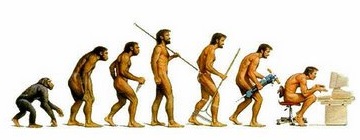 My intention is to keep this blog alive through reviewing various concepts key to my Master's and important papers I come across. For example, in the past I have reviewed a paper discussing muskellunge stocking. In the future I will likely attempt to explain things like lactic acidosis or the mechanisms behind cortisol production. Though some (most?) of you may find it rather boring, the process will be useful to me as I prepare to defend my thesis next fall.
Many thanks to those who have remained steadfast visitors and followers of this blog. For those new, I hope you take a few minutes to peruse the archives and have fun with the content. Any questions, feel free to drop me an email.
Subscribe to:
Posts (Atom)

